
Design mistakes an Architect always notices in a space

Interior design is not just a matter of aesthetics - it is a balance between proportions, functionality, and the overall atmosphere of a space. As an architect, I often notice small but significant design mistakes an architect always notices in a space that can completely change how an interior feels and functions. The good news is that most of these interior design mistakes can easily be avoided when we understand the basic principles of interior design and space organization.
Below are some of the most common mistakes that an architect will almost always notice.

Ignoring scale
Scale is one of the fundamental principles in architecture and interior design. When the size of furniture is not aligned with the dimensions of a room, the space can feel empty, unorganized, or visually unbalanced.
Large spaces require appropriately sized furniture that can fill the room and create a sense of harmony. The same rule applies to ceiling height - tall spaces require elements such as pendant lighting or larger decorative pieces that make the space feel more comfortable and visually balanced.


Wrong rug size
One of the most common mistakes in living room design is choosing a rug that is too small. When a rug is not large enough, it visually separates the furniture and creates a sense of disconnection in the space.
A properly selected rug should connect the sofa, armchairs, and coffee table into one cohesive arrangement. Ideally, at least the front legs of the furniture should be placed on the rug so the space feels more harmonious and organized.
A similar principle applies to rugs in the bedroom. The rug should be large enough to extend beyond the bed on both sides, helping the room feel visually balanced and more comfortable to use.

A TV that is bigger than the wall
The television is often the focal point of the living room, but when it is too large in relation to the wall, it can dominate the space and disrupt its balance.
In interior design, it is important that the size of the TV is proportional to the dimensions of the wall and the rest of the furniture. A well-designed TV area should be visually balanced and functional, not a dominant element that takes over the entire space.

Too much LED lighting
LED lighting is extremely popular in modern interiors, but overusing it can create a cold and overly dramatic atmosphere.
Lighting should be layered - a combination of general, ambient, and accent lighting creates a more pleasant environment. When used moderately and thoughtfully, LED lighting can highlight the architecture of a space rather than take all the attention.

Obsession with one color
Monochromatic interiors can look elegant, but overusing a single color often leads to a monotonous space without visual dynamics.
A combination of different shades, textures, and contrasts creates depth and character in an interior. It is precisely this balance of colors that makes a space more interesting and pleasant to spend time in.
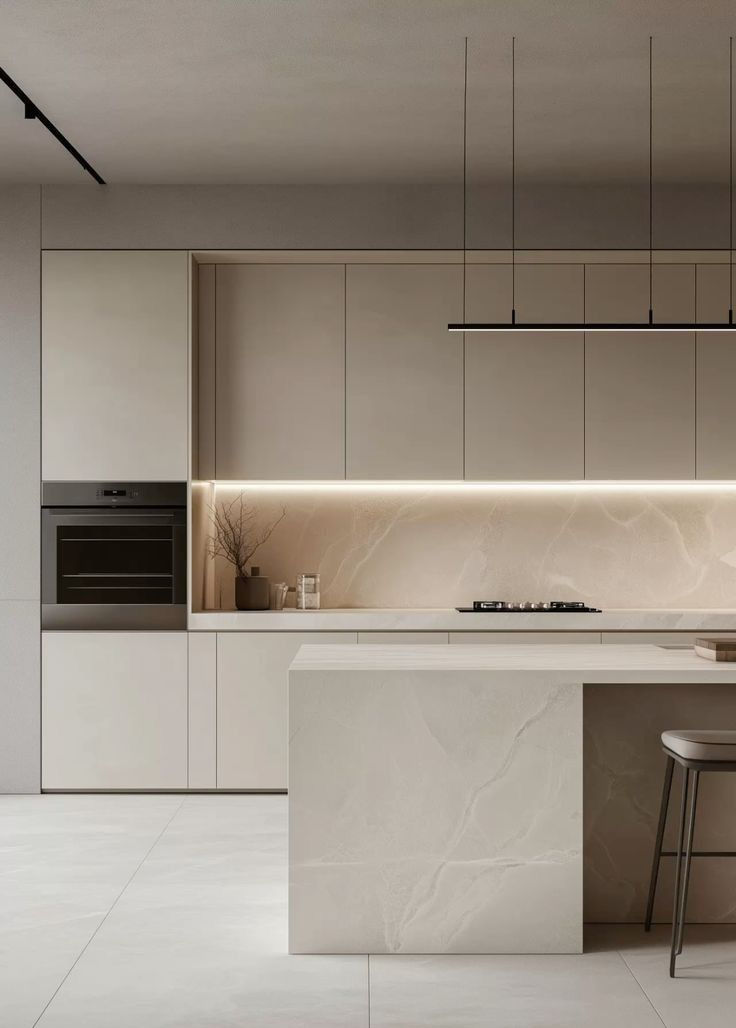
A kitchen without enough workspace
The kitchen is not just an aesthetic element of a home - it is primarily a functional workspace. One of the biggest mistakes in kitchen planning is the lack of sufficient work surface.
Enough space between the sink, stove, and refrigerator allows for easier food preparation and better kitchen organization. A well-planned workspace makes the kitchen more practical and significantly more comfortable for everyday use.

Too much decoration
Decoration gives character to a space, but when there is too much of it, the room can feel cluttered and chaotic.
In contemporary interior design, the rule "less is more" often applies. A few carefully selected decorative elements can have a much greater impact than a large number of small details.

Poorly hung artwork
Artwork can significantly enrich an interior, but only if it is placed correctly. One of the most common mistakes is hanging artwork too high or too low on the wall.
A general rule in interior design is that artwork should be hung at eye level. This allows the piece to become a natural part of the space and contribute to its visual harmony.
Interior design is much more than choosing beautiful furniture or decoration. When the basic principles of proportion, functionality, and balance are respected, a space becomes comfortable, harmonious, and truly suited for long-term living.
These small and often unnoticed issues in a space are exactly the kinds of design mistakes an architect always notices in a space, and they often have the biggest impact on how we feel in our own home.
*The photos in this article were taken from publicly available sources and are used for inspirational purposes only.
#interiordesign #danicadesign #crnagora #dizajnenterijera #arhitektura #designtips #homeimprovement #spaceplanning #functionaldesign


Comments